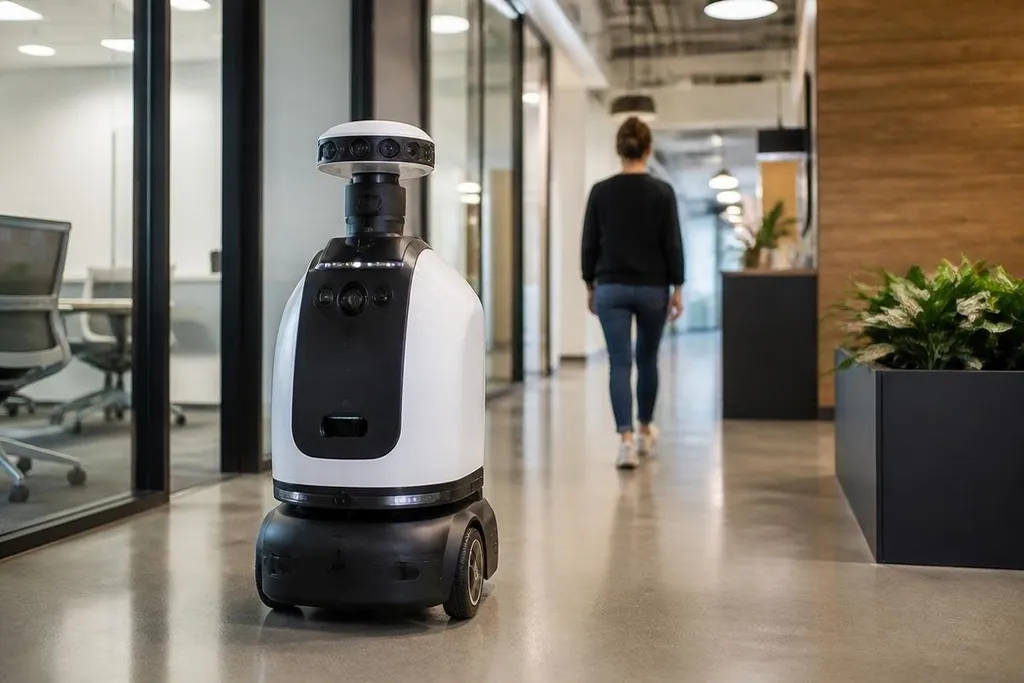
Cameras and microphones on a robot can collect information while it moves through a place. The privacy risk depends on what it records, who can view it, how long it stays stored, and whether the people nearby know about it.
- Sensors collect more than video: microphones, LiDAR, and location systems can add sound, distance, and movement data.
- Remote access changes the risk: a robot may send its data to another room, building, or service provider.
- Privacy starts before deployment: the owner needs rules for notice, storage, access, and deletion.
What the robot can see and hear
A camera records images. A microphone records sound. LiDAR measures distance by sending out light and reading its return, which can help a robot map rooms and avoid objects. Each sensor adds a different type of data to the system.
That data can reveal more than a person’s face. Its sensors may record where someone walks, when they enter a room, which desk they use, or who stands nearby. A microphone may collect conversations that have nothing to do with the robot’s task.
The robot’s movement also changes the setting. A fixed security camera watches one view, but a mobile robot can turn, enter new spaces, and follow a route.
That wider reach makes the robot useful for checking areas, but it also raises the chance of recording people who never agreed to be watched.
The software matters as much as the sensors
Raw video is one concern. Software can sort, label, or compare the data, which creates another layer of risk. A system may detect a person, follow movement across rooms, or send an alert when a selected event occurs.
Those functions can make a security team’s work easier, but they can also turn a short recording into a lasting record of behavior. The owner needs to state what the software may detect and what it must ignore. A robot sent to check doors may not need face recognition or audio recording.
Storage adds a separate question. Data kept on the robot can be lost with the machine. Data sent over a network may sit on servers outside the building. Access logs can show who viewed or copied a recording, so they should be part of the system from the start.
A privacy rule needs to name the sensor, storage path, access rule, and deployment date. Surveillance robotics reports from Robot24.com can put those facts beside the system’s stated purpose before the next section looks at why notice alone leaves gaps.
Notice does not solve every problem
A sign can tell people that a robot is operating, but notice alone may leave too many details unclear. People need to know what the robot records, why it records it, who receives the data, and when deletion happens.
Private homes, workplaces, hospitals, schools, and public streets also carry different risks. A robot in a locked warehouse may record workers during a shift. In a care setting, its sensors may collect health-related conversations. The same sensor can create a different concern in each place.
Consent can be hard to obtain in spaces where people have little choice about entering. A worker may feel pressure to accept monitoring. A visitor may see a notice only after the robot has already recorded them. Clear limits matter because the person being observed may have no practical way to refuse.
A practical privacy check
Before a surveillance robot starts work, the owner should check these points:
- State the task: name the job the robot must perform and remove sensors that do not serve it.
- Set a short storage period: delete recordings when the stated task no longer needs them.
- Limit live access: give viewing rights to named roles and record each access event.
- Block sensitive areas: keep the robot away from bedrooms, changing rooms, private offices, or other spaces where its task does not apply.
- Test failure cases: check what happens when the network drops, the robot enters the wrong room, or a person asks for a recording to be removed.
- Review the system: pause deployment when the robot starts collecting data outside its stated job.
The opposing view is practical: more sensors can help find faults, respond to incidents, and protect staff. That benefit is real only when the owner can explain the data flow and keep the robot inside its assigned task.
I'd skip any deployment that cannot answer those questions in plain language. The open issue is not whether surveillance robots can collect data; it is whether their owners can limit that collection before the first recording is made.